How to Choose the Right Shoes for Pants, Skirts and Shorts

The shoes you wear can change how a whole outfit looks, and the wrong pair can undo a combination that otherwise works well. A few simple guidelines cover most situations, and they depend on the cut of the bottom, its length, the fabric and your own body proportions. This guide goes through pants, skirts and shorts one at a time so you can match each with shoes that look balanced.
Start With Your Body Proportions
Proportions decide which shoes look balanced on you. Someone with long legs, a short torso and slim calves can wear crew socks or tall boots with a mini skirt and still look even. Someone with shorter legs, a longer torso and thicker calves usually looks better in lower profile shoes, because tall shoes can make the legs look shorter. Figuring this out first makes every other choice in this guide easier.
Wide and Flared Pants Need Narrow Shoes
A good general rule is that the wider the pant leg, the narrower the shoe should be. For bootcut, flared and wide leg pants, shoes with a narrow shape and toe box tend to look the most flattering. The silhouette of the shoe matters more than the type of shoe, and two pairs of sneakers can look very different under the same jeans. A narrow sneaker suits bootcut jeans better than a chunky one, and the same goes for heels, where pumps look more balanced under wide leg trousers than chunky heeled shoes.
Skinny Leg and Straight Leg Pants
Skinny leg pants also call for a narrow shoe profile, so anything platformed, thick or chunky throws off the balance. Skinny sneakers, sandals and knee-high boots all work, and combat boots are fine as long as they are not too chunky. Ballet flats are an option too, and so are loafers, provided the loafer has a narrow profile. People with thicker legs have more room to choose, since the contrast between the pants and the shoe is less noticeable.
Straight leg pants go with many shoes, but lower profile shoes suit them best, so low top sneakers are a better pick than high tops. Boots with a higher shaft work only when the shaft is slim and sits close to the calf. If it is too wide, it cannot fit under the pant leg and bunches up around the ankles, which looks awkward.
Cargo Pants and Sweatpants
Cargo pants go with almost any shoe. Chunky or narrow sneakers both work, and so do sandals, open-toed heels and pumps. There is very little to worry about with this style.
Sweatpants come in two main shapes, and each needs a different kind of shoe. A slim pair gives off a put-together, mature feel and looks good with an exposed ankle, so low top sneakers, loafers, ballet flats and sandals all suit it. A baggy pair has a cooler, more youthful feel, and an exposed ankle tends to look awkward with it. High top sneakers or boots with a higher shaft, such as Timberlands, work better here.
Why Fabric Weight Matters
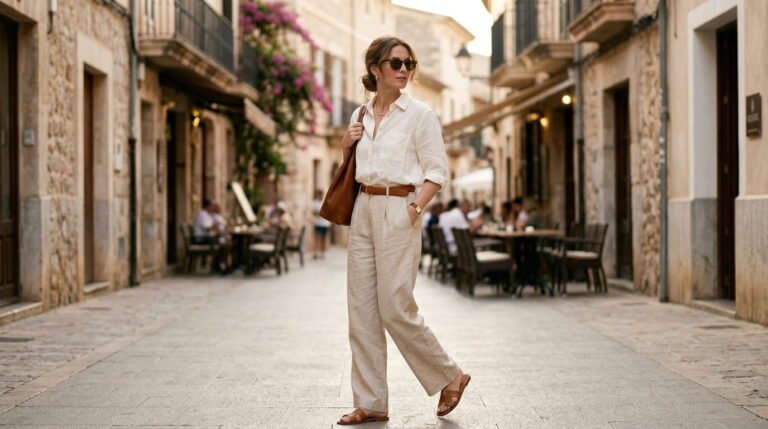
The weight and density of a fabric change the feel of an outfit even when the cut stays the same. Wool trousers look more formal because the fabric is heavy and has a lot of structure, while linen trousers feel casual because the fabric is light and has less structure. Heavier, structured fabrics call for shoes with plenty of structure too. Lightweight fabrics like linen pair well with lighter, airier shoes such as sandals.
Shoes for A-Line, Mini and Midi Skirts
A-line skirts got their name from a spring collection by Christian Dior in 1955 called the A-line. They are fitted at the waist and then flare out in a straight line, which makes them flattering on many women, especially those with narrow hips. A useful tip for any skirt is that the longer the skirt, the lower the shoe should be. This refers to the profile of the shoe, not the height of the heel.
An A-line mini skirt is the easiest length to style. Sandals, platforms, pumps, combat boots and low top sneakers all work, though your proportions may favor some over others. Someone with shorter legs and thicker calves may find that the lower the shoe, the longer the legs look.
Midi skirts look best with low profile shoes like sandals, low top sneakers and heels without an ankle strap. Midi skirts end around the middle of the calf, and a strap around the ankle can make that area look busy. Some people with thicker calves avoid this length because it draws attention to them, and they prefer a mini or a maxi skirt instead. Denim midi skirts with knee-high boots are a popular trend right now, but pulling it off takes a good understanding of your own proportions.
Learn the Conventional Pairings First
There are no strict rules in fashion, and none of these guidelines have to be followed. Still, getting comfortable with conventional pairings gives you a foundation to build on. Learning the basics first makes it easier to experiment with different silhouettes later, and it helps you make choices on purpose instead of throwing something together and hoping it works.
Maxi and Pencil Skirts
For maxi A-line skirts, stay with lower profile shoes. Anything too chunky makes the outfit look bottom heavy. If the skirt is long enough to cover your shoes completely, you do not need to think about this at all.
Pencil skirts have a formal feel and are hard to dress down, especially in a fabric like wool. Sneakers are best avoided with them. Boots should have a short shaft that sits close to the calf, such as a sock bootie, and pumps are a tried and true choice. Strappy sandal heels also work well.
Choosing Shoes for Denim, Athletic and Tailored Shorts
Denim shorts have a firmly casual look, so the usual choices are sneakers and sandals. Cowboy boots with denim shorts are also popular right now if you like that trend. Running shoes work for some occasions too, and sandals can help make the legs look longer.
Athletic shorts also have an obvious casual feel, and sneakers are the only shoe that makes sense with them. Biker shorts look good with crew socks and sneakers, and people with shorter legs may prefer ankle socks. Sweat shorts and basketball shorts also look good with crew socks and sneakers.
Tailored shorts can be dressed up or down. To dress them down, wear a strappy sandal, or wear crew socks with sneakers. To dress them up, a loafer or an open-toed heel works well.
Everything above applies no matter what your personal style is or which trends are current. Fabric density, pant leg shape, shoe profile and silhouette can be used with any outfit you put together. Knowing why a pairing works helps you shop with more purpose and rely less on micro trends, which is better for your budget and for the environment, and it helps you find what looks and feels good on you.