Five Haircuts That Flatter a Long Face

The wrong haircut pulls a long face downward, while the right one lifts it and brings balance. The five cuts below add width at the sides, break up vertical length or draw attention to the cheekbones, which is where a long face benefits most.
Shoulder Length Cut With Face Framing Layers
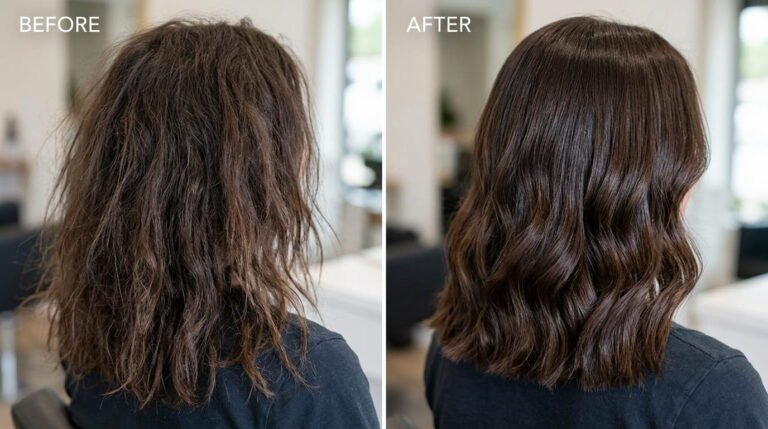
This cut keeps the softness and versatility of longer hair without pulling the eyeline downward. The key is the layering around the face. When layers begin near the cheekbones or jawline, they add width at the sides, exactly where a long face needs it, and draw focus toward the center of the features.
Pin-straight styling tends to flatter an oblong face less. If you like a smooth finish, add a soft bend or a slight outward flip at the ends. If you like texture, loose waves that fall at the cheeks add fullness to the more hollow areas.
Long Layers With Gentle Waves
This is a good choice if you love long hair but do not want it to drag the face down. Soft layering throughout helps balance the shape, and waves add side-to-side movement that shifts attention to the cheeks and jawline instead of the length of the face.
Bangs can change how this cut works, and the right type depends on where your length sits. A blunt fringe shortens the look of a tall forehead and frames the eyes, so it suits a face that is longest in the upper third. Curtain bangs suit a face that is longest in the lower third, where a blunt fringe would look too heavy.
The Chin Length Bob
This cut ends at the jawline and creates a strong horizontal line that adds width to the lower third of the face. It suits faces that feel narrow or long around the mouth. You can wear it sleek with a slight under curve or add soft waves for volume at the sides, and either way it brings focus back to the cheekbones.
Naturally curly hair can look beautiful in a bob, since curls expand outward and add width with less styling. Cutting curls is very different from cutting straight hair, and cutting curls wet can lead to a lot of shrinkage. For a long face, the volume should sit rounded at the sides and not float too high. If the cut is too blunt or poorly layered, it can turn triangular, so see a curly hair specialist.
The Bixie
The bixie is a mix between a bob and a pixie. It builds volume through the sides while keeping some length around the face and ears, which widens a narrow face and breaks up the vertical line. Compared with a pixie, it is longer and softer, with more layers, more coverage around the cheeks and often a fringe.
Ask your stylist to keep some length at the crown and to place volume through the mid sections of the face. Too much height at the top makes the face look narrower and longer. It works on straight, wavy and loosely curled textures, and it suits mature women or anyone wanting an easy style that still frames the face.
The Butterfly Cut
The butterfly cut combines the best features of the others. It is layered like the shoulder length cut, long like the second cut, has shorter pieces for width like the bob and almost always includes curtain bangs. Short face-framing layers on top and longer layers underneath give the illusion of shorter hair around the face while keeping length in the back.
The layers add movement and volume at the sides, and the curtain bangs soften the forehead and blend the shape together. Ask for the shortest face-framing layers to start around the cheekbones, since that placement gives the most lift. Choose soft, rounded layering and avoid choppy cuts, so the shape opens up the face without creating hard angles.
Whichever cut you choose, the principle is the same: add fullness at the sides and avoid extra height at the top. A good stylist can adjust any of these to your texture and proportions.