9 Products That Fix Damaged Hair
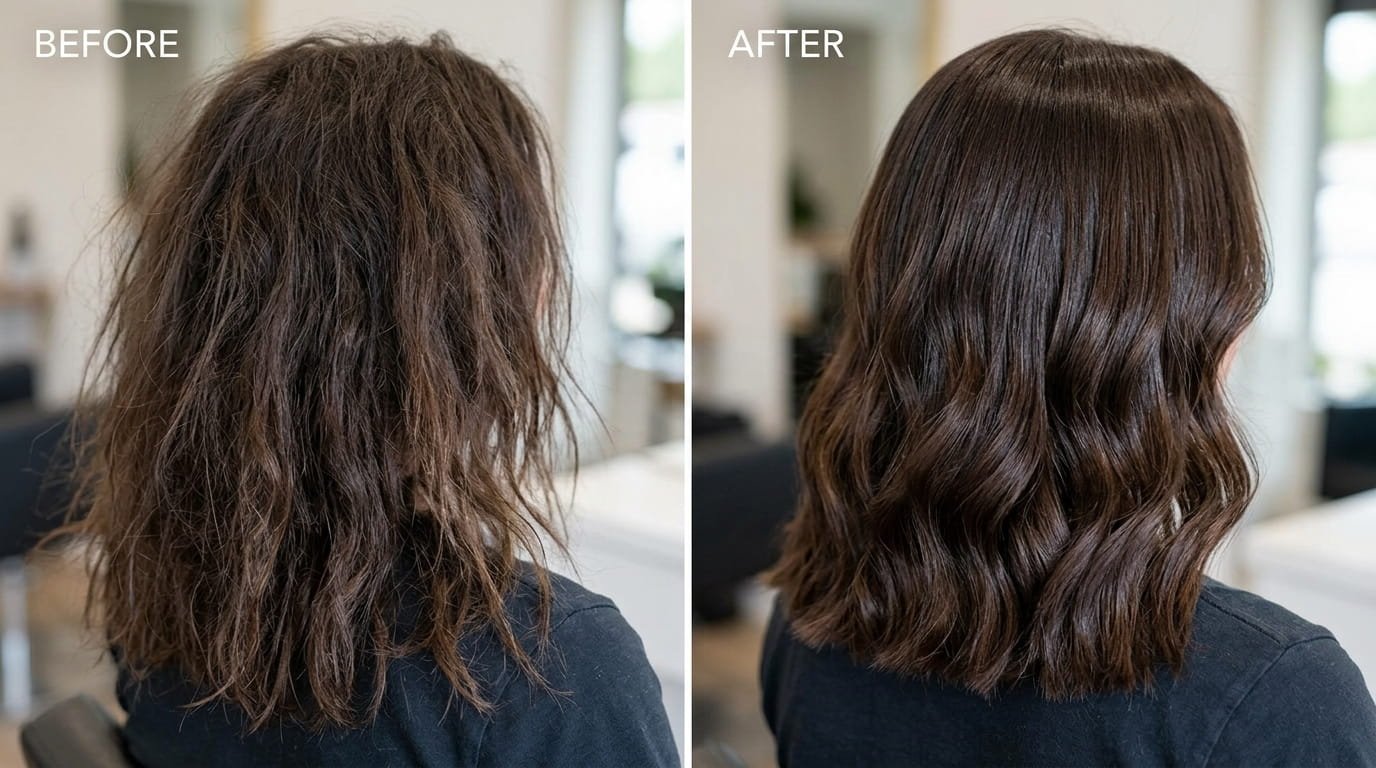
Damaged hair can quickly become dry, frizzy, rough, tangled, and difficult to style, especially after excessive heat exposure. While one use cannot permanently repair severely damaged hair, the right products can make a noticeable difference in how your hair looks and feels during the same styling session. The key is choosing products that target different problems, from damage and dryness to frizz, lack of volume, rough ends, and stubborn flyaways.
Here are 9 products that fix damaged hair and can help create a smoother, softer, more manageable finish when your hair needs an immediate makeover.
1. Redken Acidic Bonding Concentrate 5-Minute Liquid Mask
When hair has been exposed to too much heat, a repairing treatment is a good place to start. Redken Acidic Bonding Concentrate 5-Minute Liquid Mask is used after shampooing and left on the hair for five minutes before rinsing.
The treatment is intended to address the damaged feel of the hair and help create a stronger-feeling base for the rest of the routine. In the source routine, the mask is applied throughout clean hair before being allowed to work for five minutes.
This step is particularly useful when the hair feels rough and compromised rather than simply dry. Repair and moisture are treated separately in the routine, which is why another mask is used afterward.
2. Moroccanoil Weightless Hydrating Mask
After addressing the damaged feel of the hair, moisture becomes the next priority. A hydrating mask such as Moroccanoil Weightless Hydrating Mask can help give dry hair the softness and moisture it needs before styling.
The reason for using a separate hydrating treatment is that a repairing product and a moisturizing product serve different purposes. Hair that has been heavily damaged can still feel extremely dry even after a repair treatment.
Using a hydrating mask at this stage helps prepare the hair for detangling and styling while giving the lengths a softer, more conditioned feel.
3. Live Love Locks Weightless Leave-In Conditioner
A leave-in conditioner helps maintain moisture after the hair has been washed. In the routine, the leave-in is sprayed through the hair from roots to ends before the styling process begins.
This can be particularly helpful when damaged hair becomes dry again shortly after washing. Unlike a rinse-out conditioner, a leave-in product remains in the hair while you continue with detangling and blow-drying.
The amount matters. Applying too much can make the roots feel heavy, while the lengths and ends often need more attention because they tend to be drier.
4. Redken Frizz Dismiss Rebel Tame
Dryness and frizz often appear together, especially when damaged hair is exposed to heat. A smoothing blow-dry cream can help control the frizz while making the hair easier to work with during styling.
Redken Frizz Dismiss Rebel Tame is applied before blow-drying, beginning at the ends and gradually working upward. This technique puts more of the product where the hair is usually driest without leaving the roots overloaded.
For anyone who struggles to get a smooth finish with a blow dryer, the right cream can make the process much easier. It can also help the finished hair look smoother and shinier rather than dry and puffy.
5. Olaplex Volumizing Blow Dry Spray
Damaged hair often needs moisture and smoothing, but that does not mean you have to give up volume. Olaplex Volumizing Blow Dry Spray can be used when you want more body while continuing to protect and style the hair.
The product is applied in small sections with particular attention to the roots. This matters because the roots are where volume begins. When they are lifted during blow-drying, the hair can create more body rather than simply falling flat against the head.
This approach is useful when you want volume without relying heavily on texturizing products that can make already-dry hair feel rough.
6. Olaplex No. 6 Bond Smoother
Even after a careful blow-dry, damaged ends can remain noticeably dry. This is where a small amount of a smoothing cream can make the finished style look more polished.
Olaplex No. 6 Bond Smoother is used mainly on the ends in the routine. Because it is heavier than some of the earlier products, keeping it away from the roots helps prevent the hair from becoming greasy or losing the volume created during blow-drying.
The immediate purpose is to make the ends feel easier to manage and look less dry. A small amount is enough, especially when the hair is already carrying several other styling products.
7. Hair Oil
Hair oil is one of the simplest finishing products for dry ends and flyaways. After the hair has been blow-dried, a small amount can be worked into the ends before gradually moving upward.
The important part is not to overdo it. Applying too much oil can make the hair look greasy and can flatten the volume you worked to create.
For damaged or extremely dry hair, concentrating most of the oil on the ends makes sense because they generally need more moisture and smoothing than the roots. Used carefully, oil can help soften the appearance of dry ends and reduce the look of flyaways.
8. TIGI Bed Head Hair Stick
Some flyaways are difficult to control with ordinary smoothing products. A hair stick provides stronger, more targeted control when you need to keep individual hairs in place.
TIGI Bed Head Hair Stick is used in the routine as a finishing product for stubborn flyaways. Because it has a strong, sticky texture, only a very small amount is needed.
It works best as a targeted solution rather than something you apply throughout the entire hairstyle. Applying too much can make the hair feel stiff or reduce the natural volume, so the goal is simply to press down the hairs that are still standing out.
9. L’Oréal Paris Root Cover Up
Sometimes your hair is almost ready but visible gray roots become the final problem. When there is no time for a full color appointment, a temporary root touch-up can provide a quick cosmetic solution.
L’Oréal Paris Root Cover Up is used in the routine to cover visible gray areas around the part. It takes only a short time to apply and can make the finished hairstyle look more uniform.
This is not a replacement for permanent hair color, but it can be useful when you need a quick finishing touch before going out.
How to Use These Products for a Quick Hair Transformation
These products work best when each one has a specific job rather than being layered randomly. Start by washing the hair thoroughly so there is a clean surface for the treatments. Follow with a repairing treatment, then use a hydrating mask to address dryness.
Once the hair has been rinsed, apply a leave-in conditioner before adding your smoothing blow-dry product. If you want more volume, focus the volumizing spray around the roots and use your brush and dryer to create lift.
After the blow-dry, check the ends. If they still look dry, use a small amount of smoothing cream or hair oil, concentrating on the ends rather than the roots. For stubborn flyaways, a tiny amount of hair stick can provide stronger control without covering the entire hairstyle in product.
If visible gray roots are still noticeable and you need a final touch-up, a temporary root cover can finish the look.
Can Damaged Hair Really Be Fixed in One Use?
A single routine cannot permanently restore severely damaged hair to its original condition. Products can temporarily improve the appearance, softness, smoothness, manageability, and overall finish of damaged hair, but that is different from permanently reversing structural damage.
That is why the idea behind these products is better understood as an immediate hair transformation rather than a permanent repair. The right combination can make dry and damaged hair look considerably better in one styling session while a longer-term hair-care routine focuses on preventing additional damage.
If your hair is regularly exposed to high heat, the most useful approach is to combine repair treatments with moisture, heat protection, careful detangling, and controlled styling. That way, you are not simply covering up the problem every time you style your hair; you are also reducing the conditions that can continue to make it look dry and damaged.